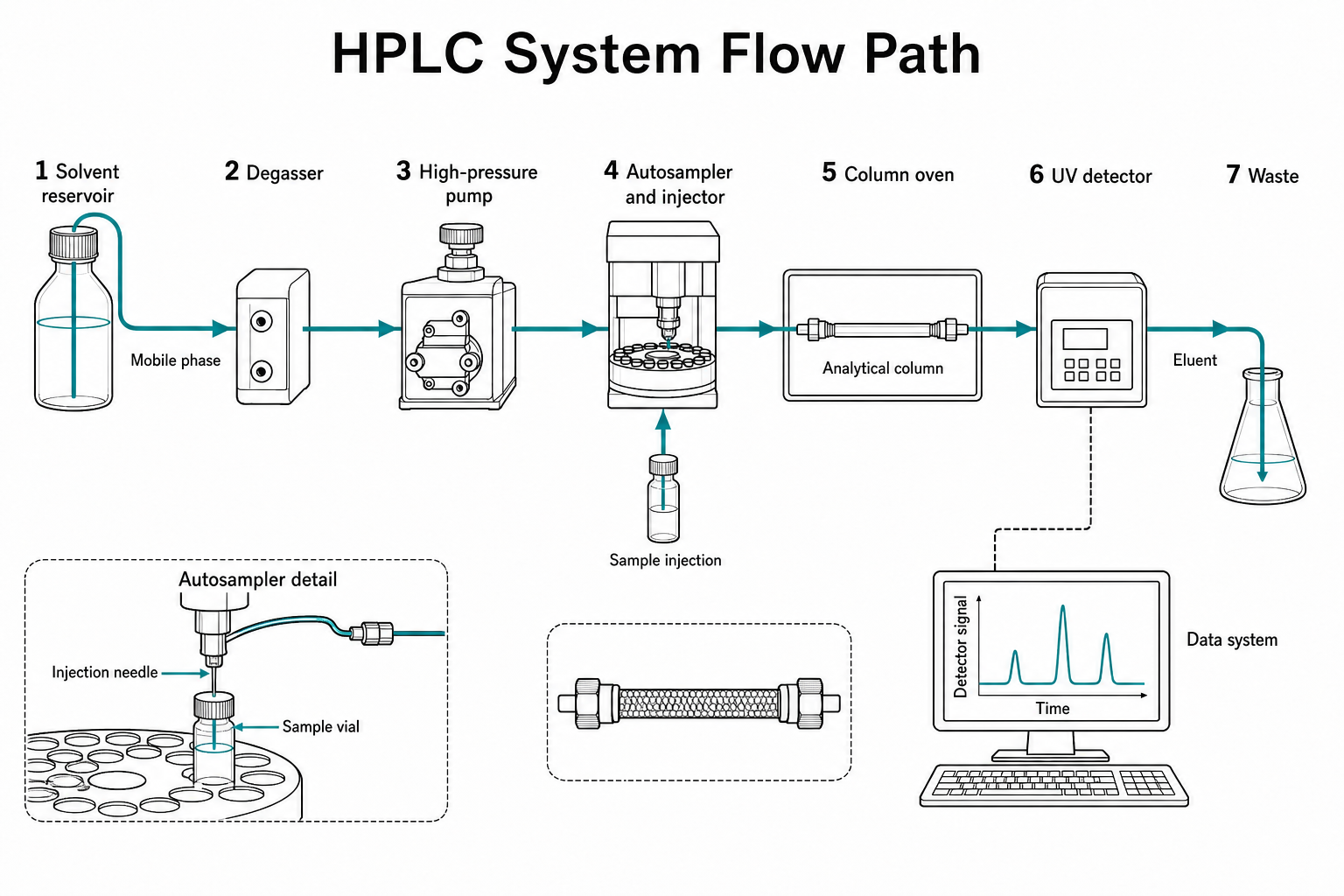

How to Cite an AI-Generated Scientific Figure
Publication disclosure field note
Credit the tool, explain how it was used, and state that the authors reviewed the final figure. Then verify that the target journal permits the image before submission.
Draft created with Scientific Figure Generator (https://scientificfiguregenerator.com/). The authors reviewed and edited the final figure and verified all labels, relationships, and scientific claims for accuracy.
The short answer
For an explanatory scientific illustration, place a tool-specific disclosure in the figure caption and add a manuscript-level AI statement if the publisher requests one. Name the tool, explain its role, and keep human responsibility explicit.
Do not use a credit line to make an otherwise prohibited image acceptable. Publisher and journal rules differ, change over time, and may distinguish explanatory diagrams from measured data, microscopy, patient images, graphical abstracts, and cover art.
Copy-ready wording
Three templates for common publication workflows
Replace bracketed details and adapt the wording to the exact journal. If a journal requests the model or version, add the information recorded for your generation.
Minimal tool credit
Use when the journal asks only for a tool credit.
Created with Scientific Figure Generator (https://scientificfiguregenerator.com/).
Figure-caption disclosure
Use in the caption when AI assisted with an explanatory diagram.
Draft created with Scientific Figure Generator (https://scientificfiguregenerator.com/). The authors reviewed and edited the final figure and verified all labels, relationships, and scientific claims for accuracy.
Manuscript AI disclosure
Adapt for the Methods, Acknowledgments, or dedicated AI statement.
Scientific Figure Generator (https://scientificfiguregenerator.com/, accessed [DATE]) was used to draft an explanatory scientific illustration from an author-written prompt. The authors reviewed and edited the output and take full responsibility for the accuracy and integrity of the final figure.
Put each disclosure in the right place
- 01
Figure caption
State which tool helped create the image, what it contributed, and that the authors reviewed the final figure.
- 02
Methods or AI statement
Describe the workflow, tool or model details requested by the journal, human editing, and verification responsibility.
- 03
Acknowledgments
Add product details or a clean tool URL when the publisher asks for software attribution separately from the caption.
Keep the evidence boundary intact
Appropriate starting points
- Conceptual mechanisms and pathways
- Experimental or analytical workflows
- Apparatus and device schematics
- Educational structural overviews
Do not generate as evidence
- Microscopy, histology, or patient images
- Western blots, gels, or radiology scans
- Plots not derived from validated data
- Measured results or unsupported findings
Current publisher guidance
Check the exact journal before you submit
These publisher-level policies were checked on July 28, 2026. Individual journals may apply narrower rules or update their requirements without notice.
- MDPIRequires authors to declare generative-AI use and describe how the tool was used; product details belong in the manuscript record.
- ElsevierAllows AI-assisted explanatory images in defined circumstances, with caption-level and manuscript-level disclosure and human review.
- Springer NatureNature Portfolio currently restricts generative-AI images except for narrow, clearly labeled exceptions.
Ready to draft