

Figure type · Reviewed October 28, 2026
Mechanism diagram maker
Describe the steps, the parts and what each arrow means. The agent plans the diagram, shows the plan and the credit cost, draws it, and lets you fix one region at a time.
What a mechanism diagram is
A mechanism diagram is an explanatory schematic that shows how a process happens, step by step: which parts take part, in what order, and what each arrow means. It covers a drug’s mechanism of action, a molecular or cellular mechanism, a catalytic or materials process, and how a device works. It is an illustration of a model, not a record of a measurement.
Scientific figure generator
Describe your mechanism diagram
Send this example or describe your own mechanism. The result opens on a canvas where you mark any arrow or label and say what to change.
3 free figures for new accounts, no card. Downloads have no watermark.
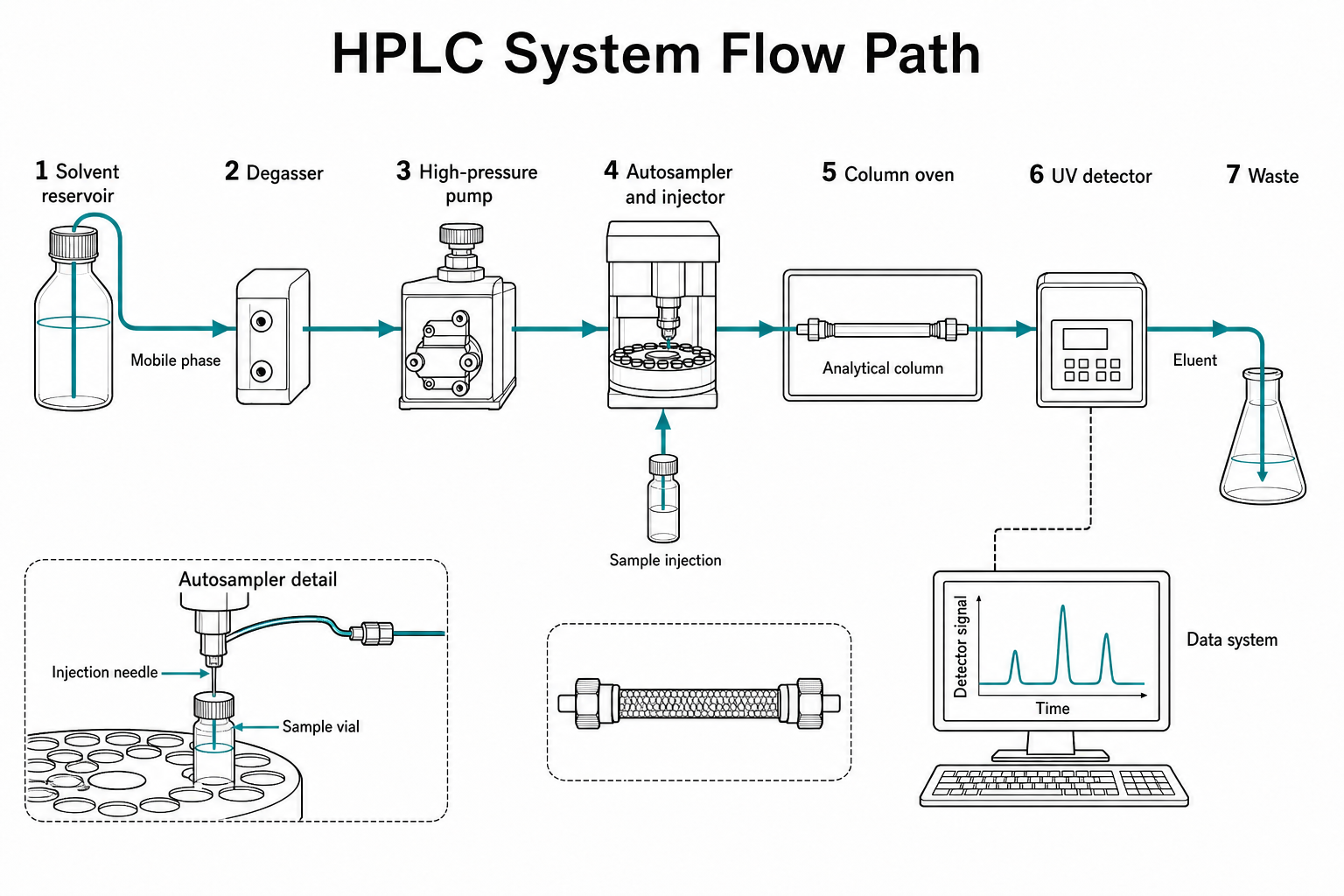
What it draws
- Mechanism of action of a drug, antibody or inhibitor, before and after treatment.
- Molecular and cellular mechanisms: binding, cleavage, transport, assembly, signalling steps.
- Catalytic, electrochemical and materials processes as numbered stages.
- How a device or apparatus works, as a cutaway or a flow of states.
What it does not draw: data
- No charts, plots, axes, error bars or significance marks: a drawn chart implies values you did not measure.
- No micrographs, blots, gels, scans or any image that would pass for an observation.
- No curved electron-pushing arrows for organic reaction mechanisms: image models do not draw valid arrow pushing. Use ChemDraw or a similar editor for those and this page for the overview schematic around them.
How to describe a mechanism diagram
The agent turns these five parts into a plan and shows it, with the credit cost, before anything is generated. The more exact the names and the arrow meanings, the closer the first draft.
- 01
The process and its boundary
Name the mechanism and where it starts and ends: “how cisplatin resistance arises through ERCC1-dependent repair, from DNA cross-link to restored duplex”.
- 02
Every part, by its proper name
List the molecules, cells, materials or components that must appear, with the exact labels: gene symbols, protein names, compound names.
- 03
The steps in order
Number the steps and say what happens at each. Left to right or top to bottom; say which.
- 04
What each arrow means
Binding, conversion, transport, activation, inhibition, and whether a step is established or hypothesised. Ask for solid arrows for the former and dashed for the latter.
- 05
What to leave out
Say “no background, no gradients, no extra molecules” so the draft stays reviewable.
Mechanism diagram templates
Made with Scientific Figure Generator. Open one, keep its layout and swap in your own parts and labels.

Genetics
CRISPR Cytosine Base Editing
Open as template
Drug Delivery
LNP mRNA Delivery
Open as template
Cell Biology
Autophagy-Lysosome Flux
Open as template
Cellular Bioenergetics
Mitochondrial Oxidative Phosphorylation
Open as template
Neuroscience
Synaptic Transmission
Open as template
Biochemistry
Michaelis-Menten Enzyme Kinetics
Open as templateWhat reviewers expect in a mechanism diagram
Arrows carry meaning, so define them
Reviewers read a plain arrow as conversion or movement and a bar-headed line as inhibition. If the figure mixes binding, catalysis and transport, use different arrow styles and define them in the legend.
Established versus proposed
Draw steps the field agrees on with solid arrows and your hypothesis with dashed ones, and say so in the legend. A mechanism figure that presents a hypothesis as settled is a common reviewer objection.
One mechanism per figure
If two outcomes are compared (sensitive versus resistant, with and without drug), draw them as two aligned panels with the same layout, so the difference is the only thing that changes.
Labels match the text
Use the same gene symbols, protein names and abbreviations as the manuscript, and define them again in the legend; figures are read on their own.
Before submitting, check the publication checklist, write the legend with the figure legend guide, and disclose the tool as the citing guide describes for your publisher.
Mechanism diagram FAQ
Keep going
Signaling pathway diagram maker
Draw a signaling pathway diagram from a description: receptor to nucleus, activation and inhibition, phosphorylation, compartments. Schematics only, not data.
Experimental design diagram maker
Draw an experimental design diagram from a description: groups, timeline, treatments, sampling points and analysis workflow. Study schematics, not results.
How to write a figure legend
The six parts, five examples and eight publishers’ legend rules.
Citing AI-generated figures
Disclosure wording and the rules of ten publishers, with sources.
Describe it once. Correct it region by region.
3 free figures for new verified accounts, the plan and cost shown first, and no charge for failed results.
Start with 3 free figures